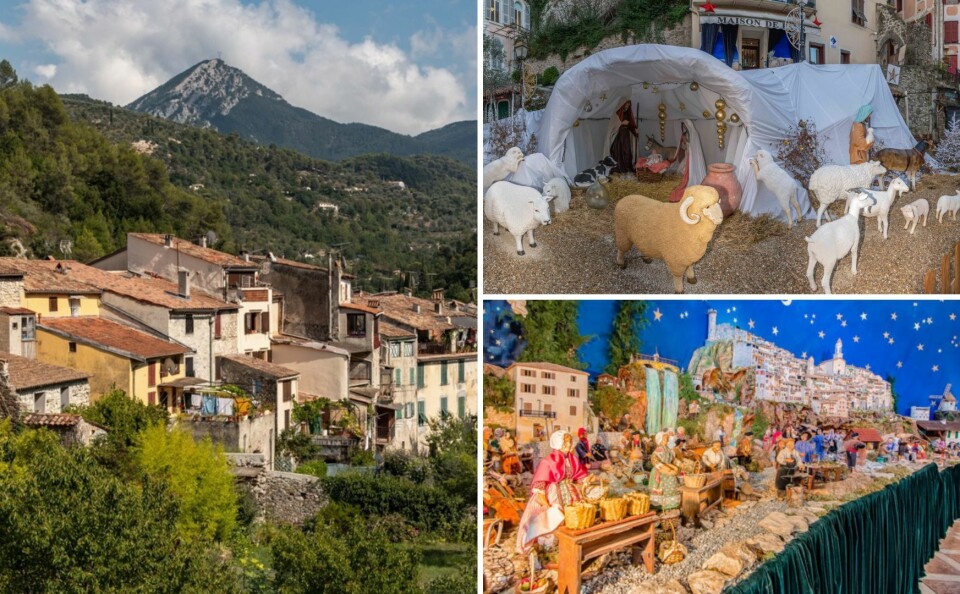
Across France, you will see model replicas of the nativity arranged in churches, schools and public spaces like town squares. Some towns even organise a full-scale ³¦°ù賦³ó±ð vivante, a live-action affair with adult actors.
A nativity scene with small figures called santonsNoble Nature/Shutterstock
In this small medieval village, however, the festive celebrations revolve around a circuit of up to 500 nativity scenes, placed in the streets, on window ledges, in barns and even in the village bread oven.
Now in its 28th year, the tradition started when a Provencal nativity scene was displayed behind the Chapelle Saint-Pierre, which in 1996 grew to include over 100 figures dressed to represent former trades in period costume.
This display was featured on the front page of the publication Nice Matin and attracted a number of tourists.
Since then, the Circuit des Crèches has expanded, welcoming over 50,000 visitors every year.
It is open every day and is completely free to visit.
Small figures called santons are used in Provence
A true ³¦°ù賦³ó±ð should depict Mary, Joseph and the baby Jesus, the ox and donkey from the manger, and will often include the three kings and shepherds.
The ³¦°ù賦³ó±ð²õ in Provence traditionally use santons, which are small figures made of clay that depict ordinary people on their way to pay homage to Christ.
Look out for figures representing the local mayor, priest and the fada (fool), who symbolises simple delight at Christ’s birth.
Even if you cannot make it to the main event, you can still experience the microscopic detail of some of the classic nativity scenes from the past 25 years. It is worth visiting at any time.
Construction started on Sainte-Marguerite church in 1487, and its stunning interior was created in 1763, in the highly decorative and colourful Rococo-Italian style.
There are also two chapels in the village, the Notre-Dame-du-Bon-CÅ“ur and Chapelle Oratoire Saint-Grat, both of which boast impressive wall paintings and are classed as Historic Monuments.
This village feels like it is harbouring a hidden secret, with winding alleyways that disappear around corners, cobbled streets and high walls that seem to shelter you from the modern world.
Take time to explore the medieval structures and remnants of daily life such as the old lavoirs, communal stone troughs where villagers would gather to wash their clothes and catch up on the latest gossip.