First case of native dengue fever from tiger mosquito in Paris area
This is the first time that a native case has been confirmed so far north
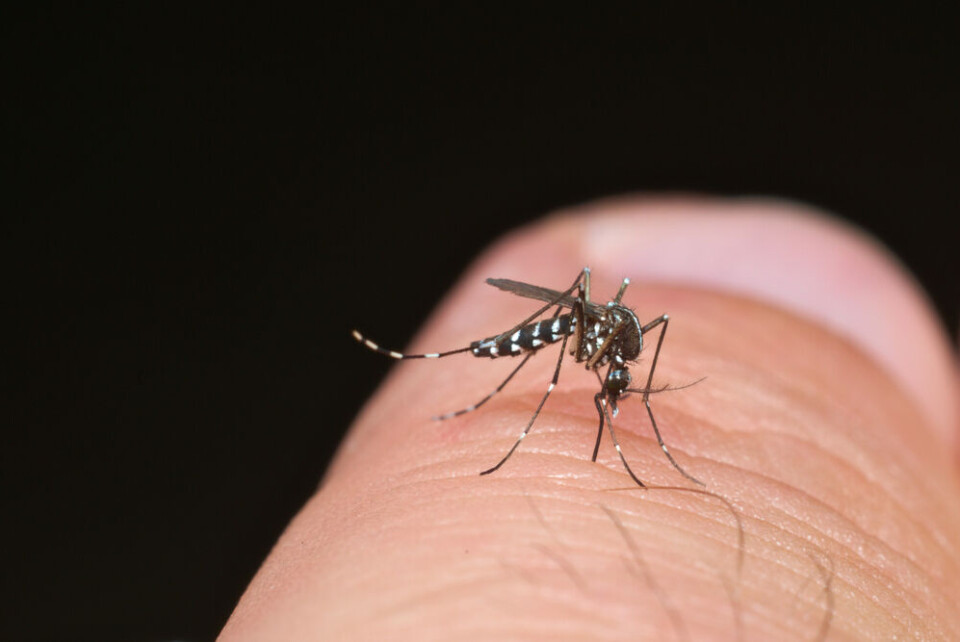
Tiger mosquitoes are spreading across France, and now the first case of native dengue has been identified in Ile-de-France for the first timeMario Saccomano / Shutterstock
Hannah ThompsonHannahThompson
PublishedModified
Advertisment
A case of native dengue fever has been confirmed in the Paris region, health authorities have reported.
The 鈥榥ative鈥� (autochtone in French) case was confirmed in Ile-de-France, in Limeil-Br茅vannes (Val-de-Marne), around 20 km southeast of Paris. The regional health authority l鈥橝gence R茅gionale de Sant茅 (ARS) confirmed it is the 鈥渇irst native case of dengue in Ile-de-France鈥�.
This is the first time that a native case has been recorded in such a northern region of France.
A 鈥榥ative鈥� case means that the patient contracted the illness on French soil and had not recently travelled to an area typically known for dengue, such as Southeast Asia or the Caribbean.
Dengue fever is spread by tiger mosquitoes, whose number has grown significantly in France since it was first reported in the country in 2004.
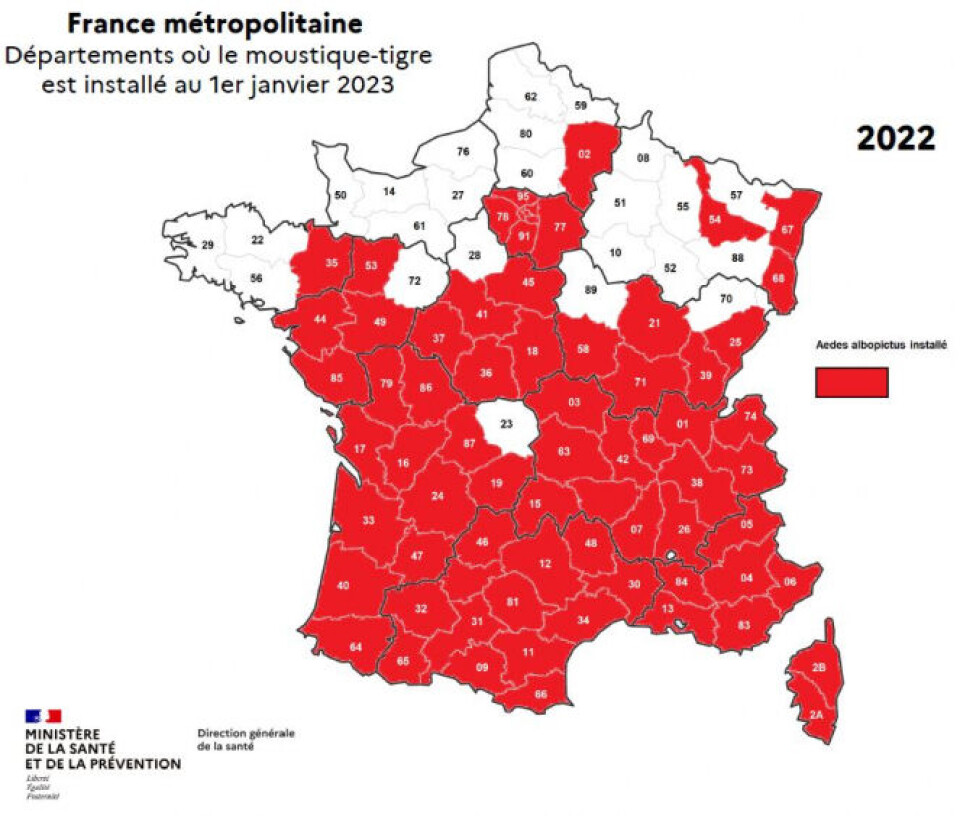
Slowly, largely due to rising temperatures and climate change, the insect has spread from the southern Mediterranean regions to most other departments in France.
Map: Minist猫re de la Sant茅
In 2022, there were 66 native cases of dengue in France, mainly in Provence-Alpes-C么te-d'Azur and in Occitanie. Health body Sant茅 publique France (SPF) said that this was 鈥榚xceptional鈥�, as it was more than the total number of cases seen from 2010-2021 combined (48).
It has been mandatory for doctors to report cases of dengue since 2006, and each case requires a health investigation.
Advertisment
In September last year, health authorities warned of the likelihood of increased cases of the illness - along with Zika and chikungunya, which are also passed on by tiger mosquitoes - due to the spread of the mosquitoes.
Dengue causes a high fever, a headache, joint pain and digestive problems. It can also cause rashes, and in very rare severe cases, can cause haemorrhage. It is typically not fatal; only 0.01% of patients die.
Outside of mainland France, the French overseas territories have been experiencing varying levels of dengue epidemic since mid-August.
How can you tell a tiger mosquito from a 鈥榥ormal鈥� mosquito?
Despite their 鈥榖ig cat鈥� name, they are still small (less than 0.5cm in length). Yet, they can be identified by their distinctive black and white 鈥榮triped鈥� markings, which give them their name.
Unlike 鈥榥ormal鈥� mosquitoes, they are silent and do not make the same buzzing sound.
However, the type of mosquito and the number can vary considerably from region to region, with around 70 different species present in France. Only some of them bite, and most do not carry diseases that affect humans.
How to avoid being bitten
Health authority suggests the following tips to help avoid the insect:
Regularly empty or remove any stagnant water, including the cups under flower pots, vases, etc., or fill them with sand in order to maintain humidity without stagnant water
Store buckets, gardening equipment, toys, and other containers away from the rain
Cover water collection containers with mosquito netting or fabric
Clean gutters to allow proper drainage
SPF says that people should consult their doctor as soon as possible if they notice any symptoms after receiving mosquito bites, or if returning to France from an at-risk country.
Your browser is blocking our login functionality, so we are unable to verify you are a subscriber. Please try using a different browser or click HERE to visit our FAQs if the issue persists.